
The $125 million look I’m stealing this week
Digger releases this Friday, October 2. Tom Cruise plays Digger Rockwell, an unrecognizable oil tycoon — prosthetics, grey combover, thick accent — trying to convince the world he’s its savior from an ecological disaster his own company caused. It’s directed by Alejandro G. Iñárritu (Birdman, The Revenant), and it’s being talked about as a Dr. Strangelove-style satire.
But here’s what caught my eye: it’s shot by Emmanuel Lubezki. Three Oscars. The man behind the endless takes of Birdman and the frozen hell of The Revenant. And for Digger, he shot on VistaVision — a giant 35mm format with roughly twice the image area of normal film — using lenses built specially for this movie. Cruise himself said “you’ve never seen VistaVision look like this.”
So I did what I always do. I recreated five of its signature shots with AI video, to find out how close a typed prompt can get to a $125 million look.
One honest note: the film isn’t out yet as I write this. These recreations are built from the trailer and from Lubezki’s unmistakable signature — natural light, huge frames, chaos that stays beautiful. No trailer frames were used; every image below is AI-generated.
The look in 30 seconds
- Natural light only. Lubezki’s famous rule — the sun is the lighting department.
- Magic hour everything. That burning orange-purple sky all over the trailer.
- Enormous frames. VistaVision means tiny humans lost inside huge landscapes.
- Chaos, composed. The end of the world, framed like a painting.
- Absurdity underneath. Cruise reportedly dances with a shovel while everything burns. The grandeur is the joke.
Shot 1: The magic-hour epic
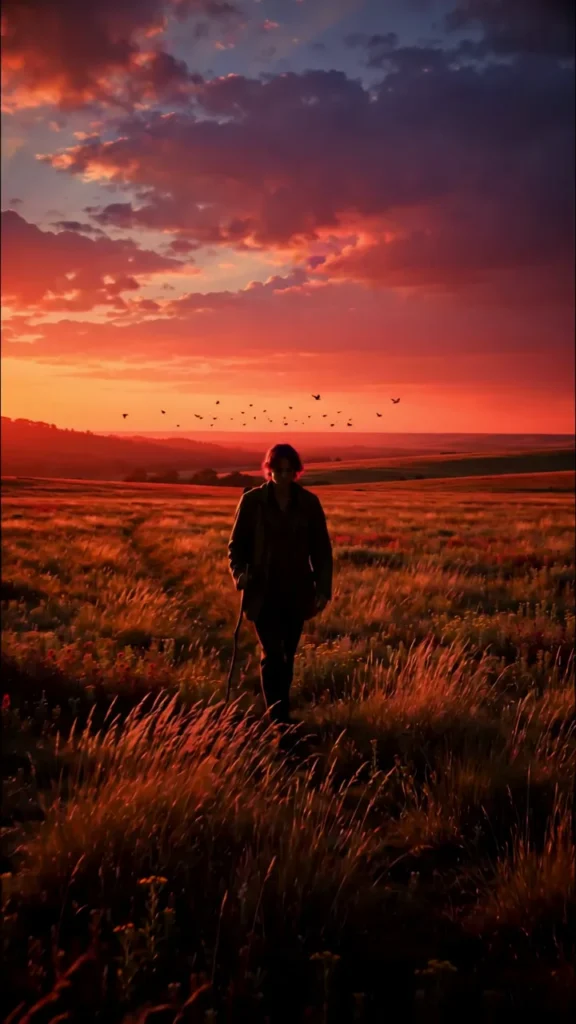
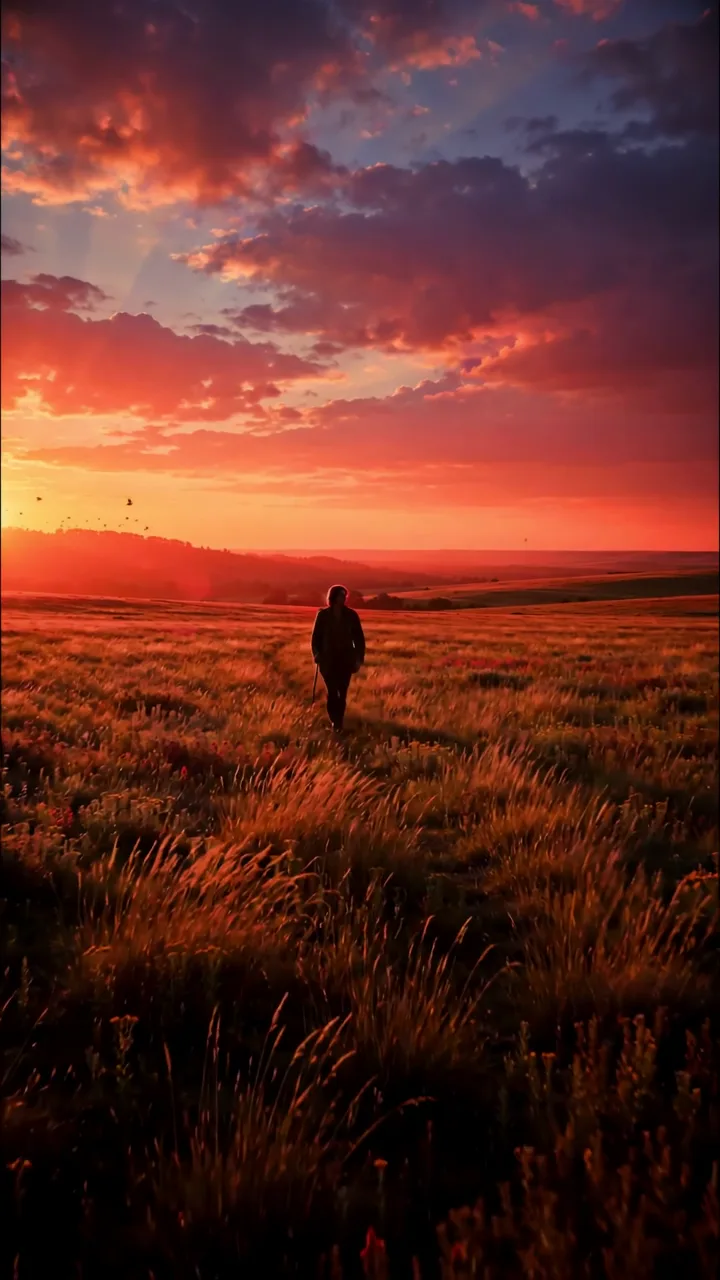
What the film does: Lubezki loves putting a small figure inside a landscape so big it swallows them. It makes one person look completely powerless — perfect for a satire about a man who thinks he’s saving the planet.
The AI version: This is the easiest Lubezki shot to steal. Wide frame, low sun, one walker. The prompt does almost all the work:
Wide cinematic shot, a tiny human figure walking across a vast open plain at magic hour, enormous dramatic sky, natural sunlight only, photorealistic, subtle 35mm film grain
Shot 2: The window-light portrait
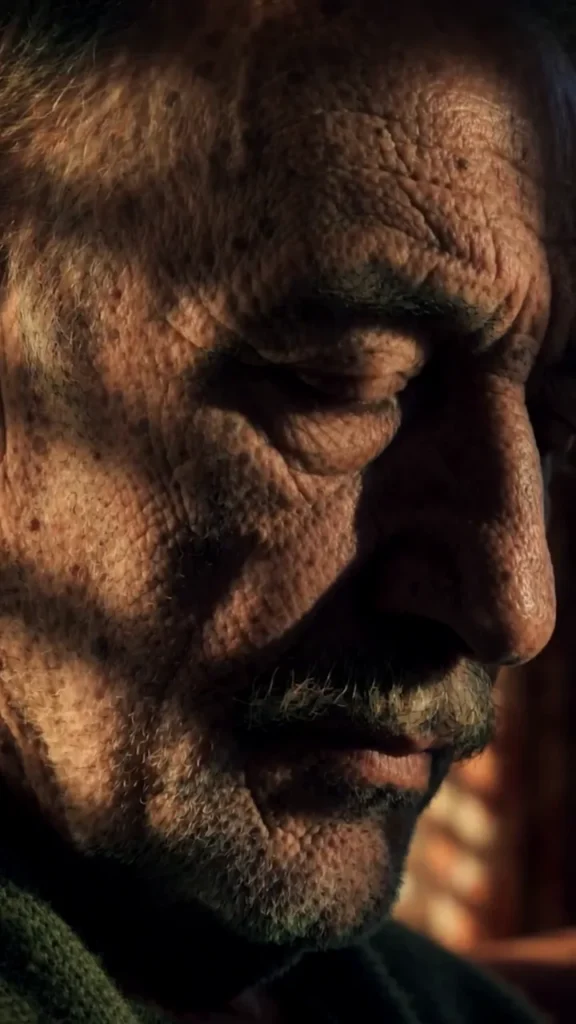
What the film does: Half the face lit, half gone. Lubezki lights people with real windows and lets the shadow do the acting. For a character like Digger Rockwell — half savior, half fraud — it’s basically character writing in light.
The AI version: Close-ups are where AI usually falls apart, so keep it simple and let shadow hide the sins:
Extreme close-up portrait, half of a weathered man's face lit by warm natural window light, half falling into deep shadow, photorealistic, subtle 35mm film grain
Shot 3: Beautiful chaos
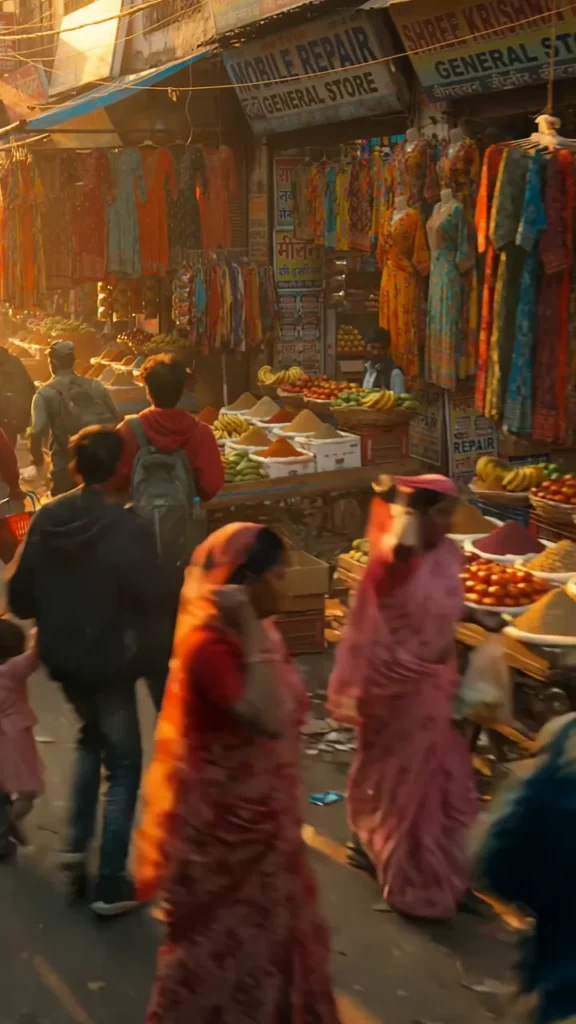
What the film does: The trailer is full of crowds in motion — panic, press scrums, machinery of crisis. But it’s all backlit and golden. Disaster, shot like a dream. That contrast is the whole satire: the world ends, and it looks gorgeous.
The AI version: Crowds are hard for AI, so ask for energy and light rather than individual faces:
Crowd of people moving through a dusty street, strong golden backlight, dust glowing in the air, handheld camera energy, cinematic, photorealistic, natural light only
Shot 4: The silhouette
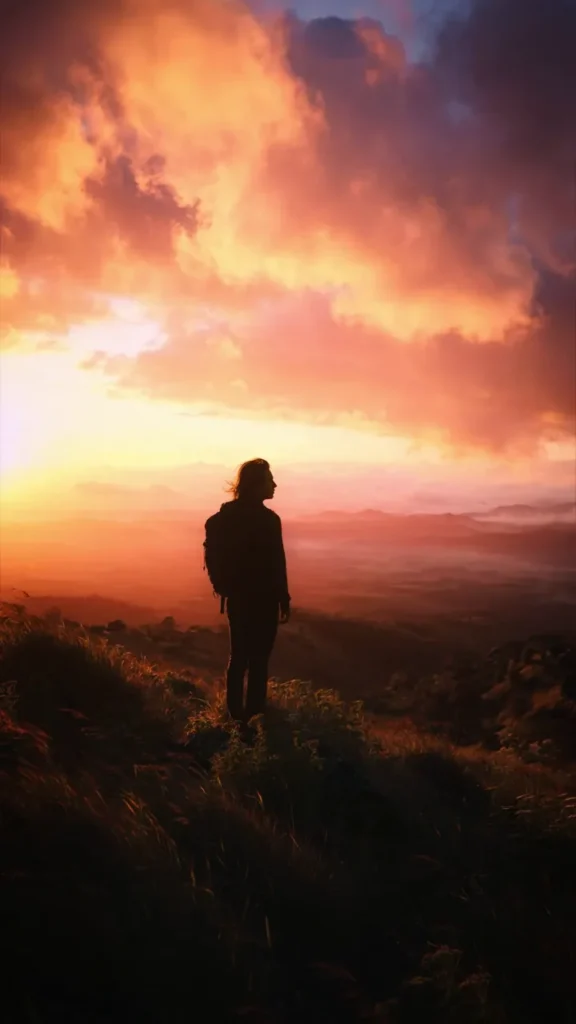
What the film does: A lone figure against a blown-out sky. No face, no detail — just shape and scale. It’s Lubezki’s cheat code: when the light is perfect, you don’t need anything else in the frame.
The AI version: Silhouettes are AI’s best friend. No faces to glitch, no hands to melt:
Lone silhouette of a person on a hilltop against a blown-out bright sky, epic sense of scale, natural light, cinematic, subtle film grain, photorealistic
Shot 5: The dead studio
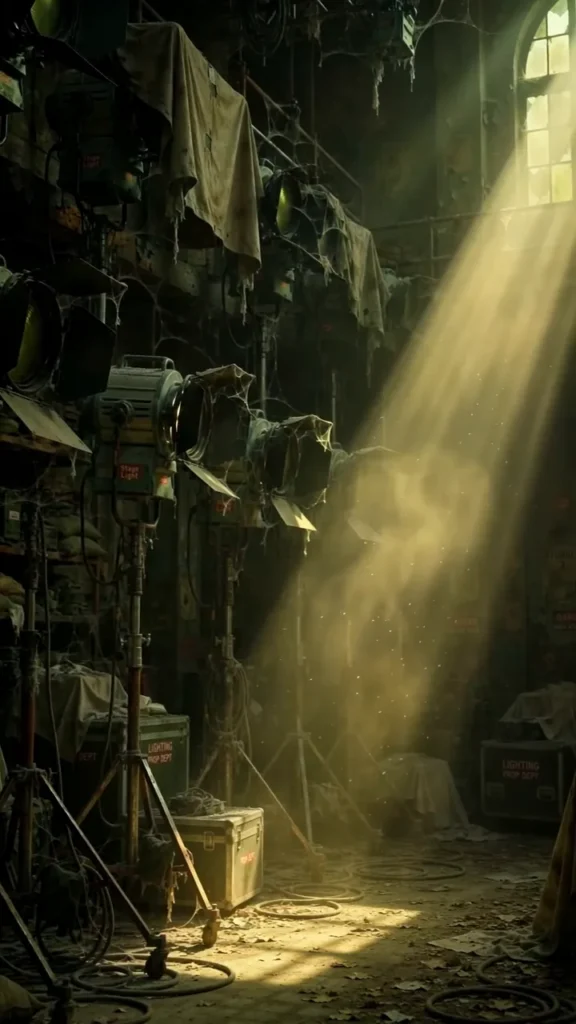
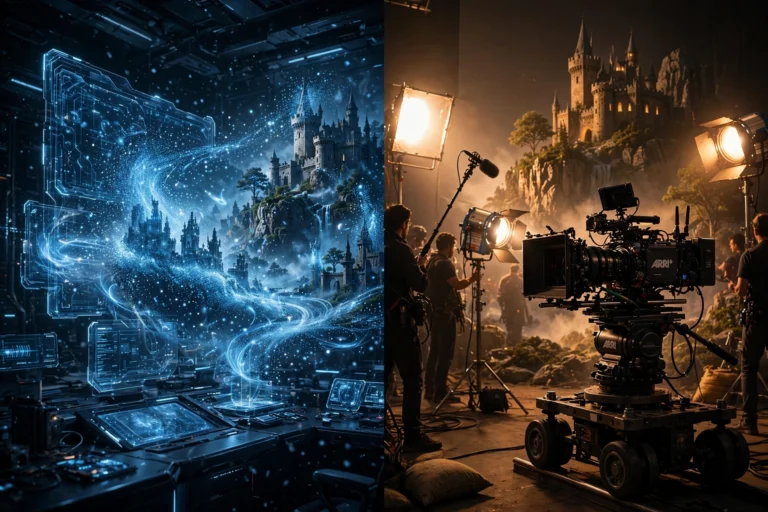
What the film does: This one’s my invention, but it belongs here. Digger is a satire about money and power — so here’s the satire of its own cinematography: a warehouse of expensive movie lights, all switched off, while one shaft of free daylight does the job better.
The AI version:
Dark abandoned film studio interior, rows of huge professional studio lights covered in dust sheets standing idle, a single shaft of daylight cutting through from a high window, moody, cinematic, photorealistic
The full prompt pack (copy-paste)
All five, ready to drop into your video generator. Add “vertical 9:16” if you’re making shorts:
1. Wide cinematic shot, a tiny human figure walking across a vast open plain at magic hour, enormous dramatic sky, natural sunlight only, photorealistic, subtle 35mm film grain

2. Extreme close-up portrait, half of a weathered man's face lit by warm natural window light, half falling into deep shadow, photorealistic, subtle 35mm film grain

3. Crowd of people moving through a dusty street, strong golden backlight, dust glowing in the air, handheld camera energy, cinematic, photorealistic, natural light only

4. Lone silhouette of a person on a hilltop against a blown-out bright sky, epic sense of scale, natural light, cinematic, subtle film grain, photorealistic

5. Dark abandoned film studio interior, rows of huge professional studio lights covered in dust sheets standing idle, a single shaft of daylight cutting through from a high window, moody, cinematic, photorealistic
Where AI still can’t touch Lubezki
Honesty time. Five things the real thing does that prompts can’t:
- The long take. Lubezki’s signature is the unbroken shot that runs for minutes (Birdman faked one continuous take for a whole film). AI video gives you ~10 seconds. You can stitch, but you’ll never get that flowing single-take feeling.
- Consistent light. A real DP keeps the sun’s direction honest across every angle. AI re-invents the lighting in every shot — fine for a montage, obvious in a scene.
- VistaVision depth. That giant negative has a texture and depth AI fakes with grain filters. Close, not the same.
- Precision. Iñárritu can tell Lubezki “two inches left.” You get variations on a theme and pick the best one.
- Faces in motion. Still the weakest link. Notice how three of my five shots hide the face — in shadow, at distance, or as a silhouette. That’s not a coincidence; it’s strategy.
But here’s the flip side: Lubezki needed a $125 million production, custom lenses, and the actual sun. I needed an afternoon and five paragraphs. For a short film, a YouTube short, or a pitch — that’s not a bad trade.
Steal the look yourself
We turned this exact breakdown into a 50-second vertical short — watch for it on the Cranky Deeds YouTube channel. And if you want to build shots like these without guessing at prompts, the AI Film Prompt Director structures camera, light, and mood for you — free, no signup.
Digger is in theaters and IMAX from October 2. Go see what $125 million of sunlight looks like — then come back and steal it for free.