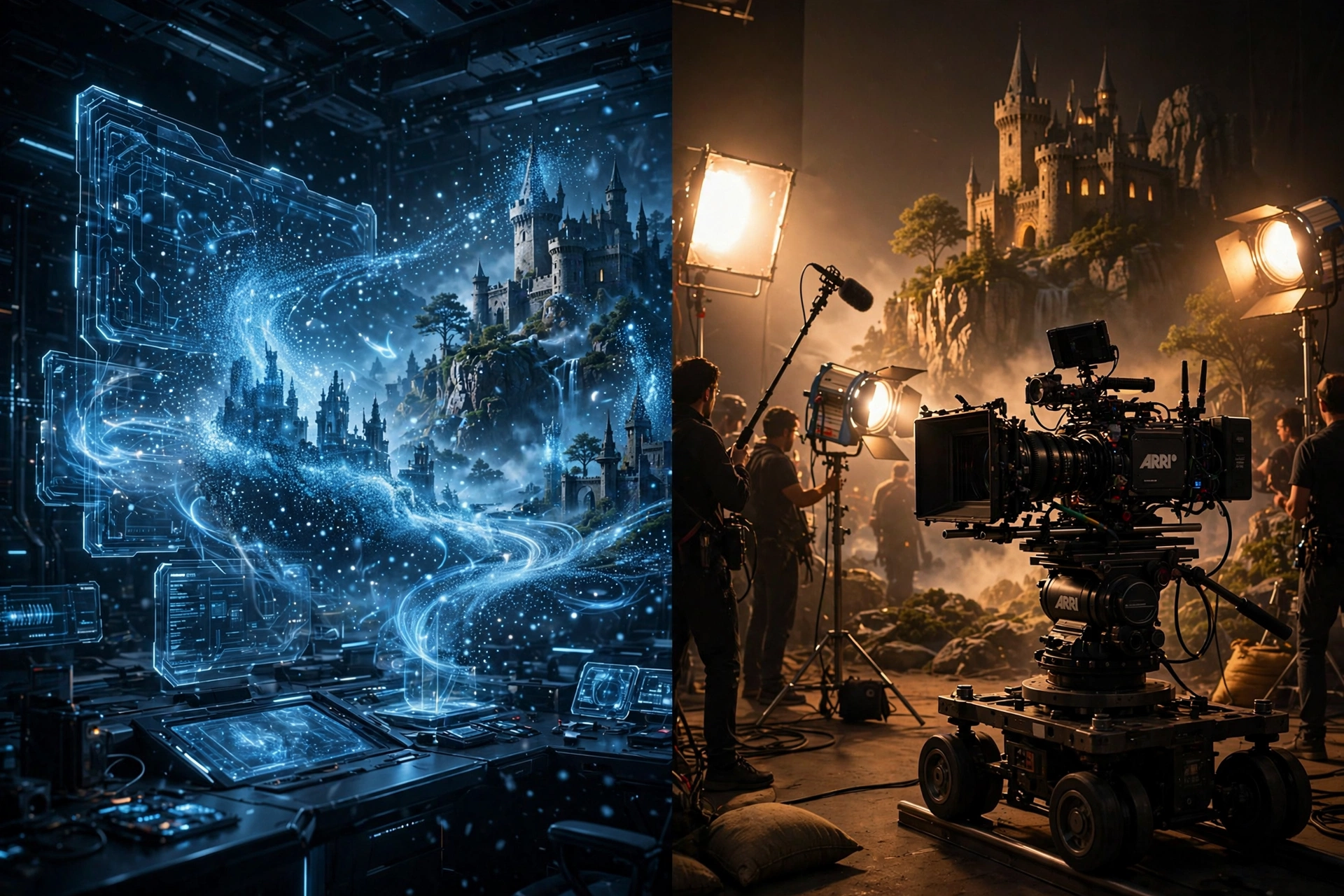

People keep asking me how AI filmmaking compares to “real” filmmaking. It’s a fair question. Recently I made THE LAST FLAME — a two-episode dark-fantasy AI short film — in a single day, with every frame generated by AI. I wrote up the whole process here.
So here’s my honest take. No hype, no doom. Just what each side is actually good at, from someone who now knows one side from the inside.
Cost
Traditional filmmaking costs money at every step. Cameras, lenses, locations, actors, crew, food, insurance. Even a tiny short film can run into hundreds or thousands of dollars before you shoot a single frame.
AI filmmaking costs almost nothing. I made two full episodes — 83 and 97 seconds — for the price of a video-generator subscription and free editing software. Each shot cost pennies.
Winner: AI, by a mile. This is the single biggest thing AI changes. Money is no longer the thing standing between you and a film.
Speed
A traditional short takes weeks or months. Scheduling people, shooting days, waiting on locations, then editing. Everything moves at the speed of humans and calendars.
With AI, I went from an idea in the morning to a finished episode by night. The clips generate in minutes. The slow part isn’t rendering — it’s your own decisions: which take to keep, what to cut, where the music goes.
Winner: AI. Nothing traditional comes close on turnaround.
Actors and performance
This is where traditional film pulls far ahead, and it’s not close.
A real actor gives you things AI simply cannot: micro-expressions, comic timing, a voice that cracks at exactly the right moment. A great performance is the reason we remember films at all.
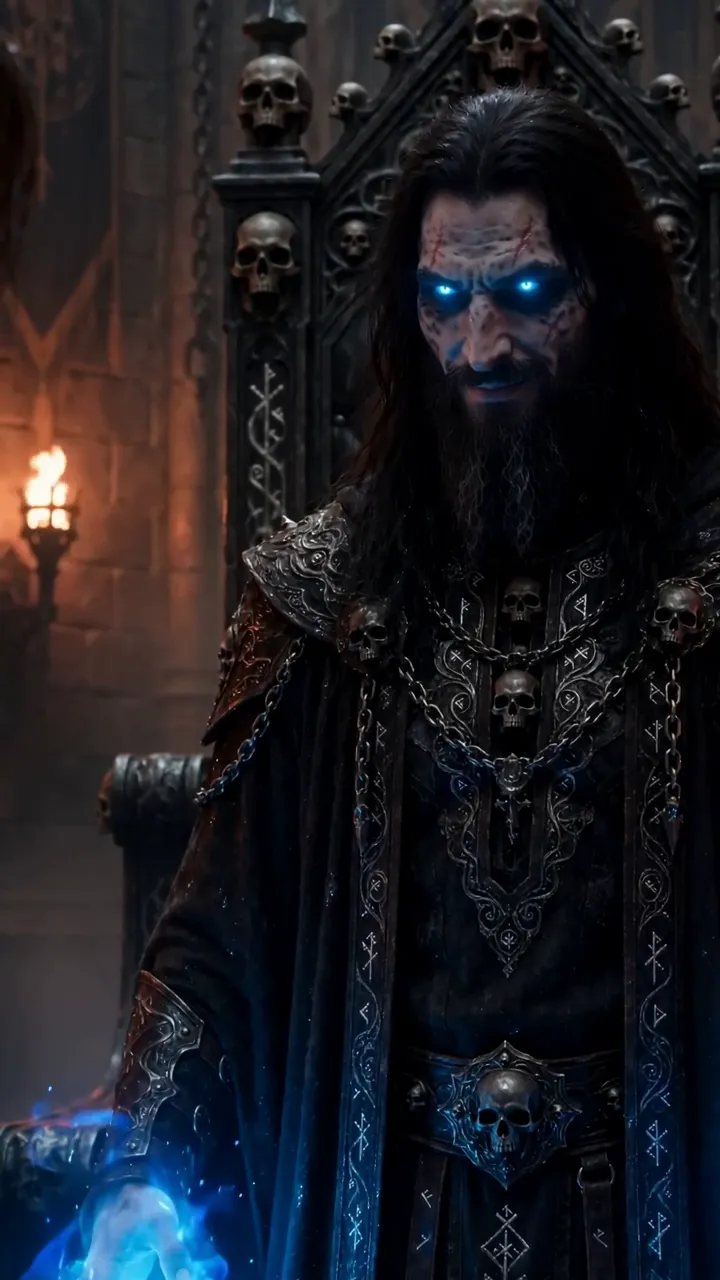
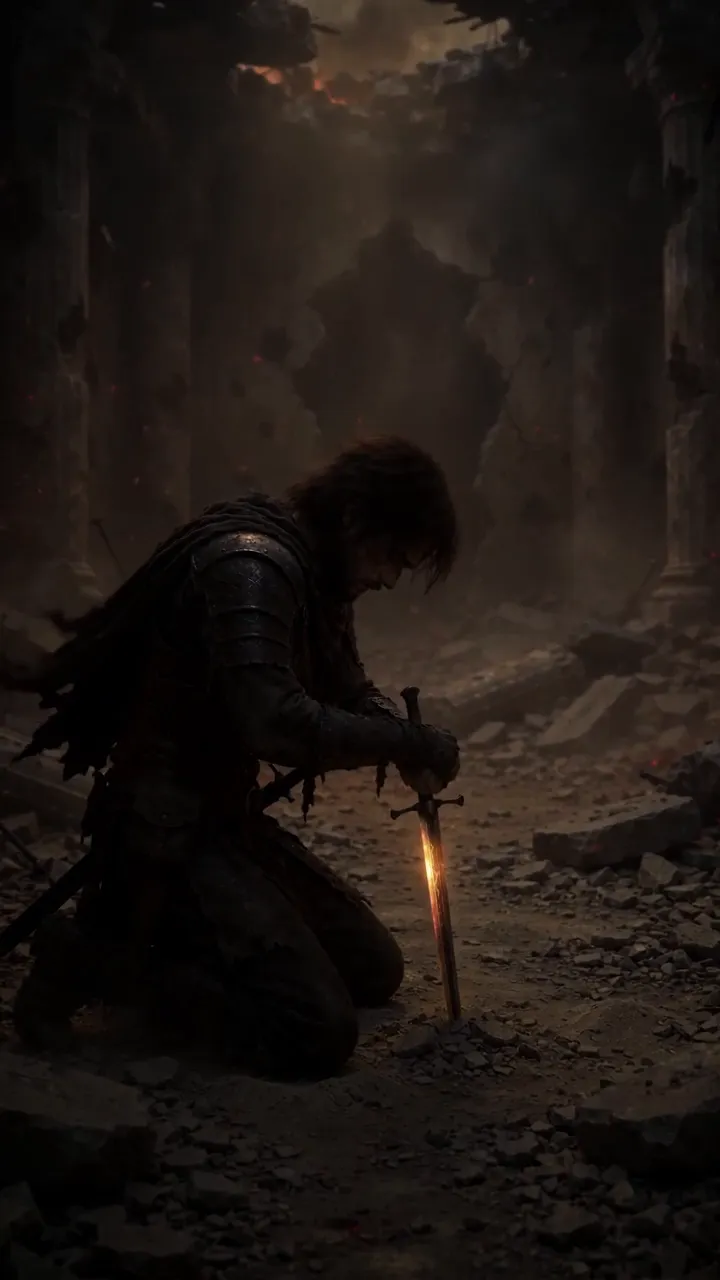
My AI characters look real in a still frame. Kael’s glowing eyes are genuinely striking. But put him in motion and the truth shows — he can’t act. There’s no inner life, no subtlety. And since AI has no reliable lip-sync, real dialogue scenes are basically off the table. I wrote around dialogue instead of through it.
Winner: traditional, easily. If your story lives or dies on performance, you still need humans.
Character consistency
In traditional film, the same actor shows up every day. Same face, same costume, same hair. Consistency is automatic because it’s the same person.
In AI film, it’s a daily fight. My hero’s face drifted between scenes — same description typed in, slightly different jawline coming out. I spent hours regenerating clips trying to keep Arin looking like Arin. You learn tricks: identical descriptions every time, reference images, cutting to different angles when a face changes too much. But it’s never fully solved.
Winner: traditional. Cameras don’t forget what your actors look like.
Sound and dialogue
Traditional productions record sound on set, re-record dialogue later, and design every layer. Dialogue just works — you write it, actors say it, microphones catch it.
AI video generators make silent clips. Everything gets added afterwards: music, sound effects, any voice at all. That’s fine for atmosphere, but it means dialogue is a workaround, not a feature. When a scene I wanted needed spoken lines and the lip-sync wouldn’t cooperate, I fell back on title cards — white text on black. It worked, but it’s a compromise, not a choice.
Winner: traditional. Sound is half of film, and AI starts from silence.
Impossible shots
Here’s where AI flips the table completely.
A burning castle, a sorcerer hurling blue fire, an army stretching to the horizon — in traditional filmmaking, these shots need serious CGI budgets or they simply don’t happen. They’re the reason fantasy epics cost hundreds of millions.
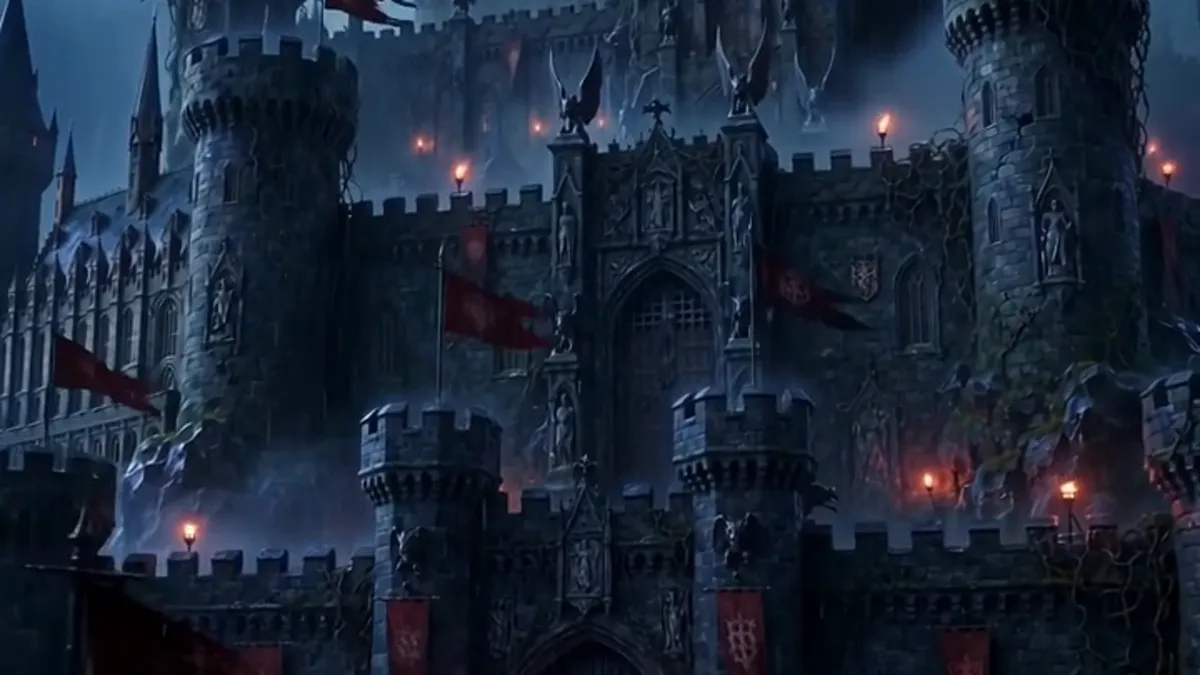
In AI, I typed a sentence and got a burning castle. Spectacle that would bankrupt an indie filmmaker costs me one prompt and a few minutes. My film is full of shots I could never have afforded any other way.
Winner: AI, and it’s not close. This is AI’s superpower: the expensive shot becomes the cheap shot.
Creative control
A traditional director controls everything. The exact prop on the table. The exact shade of the costume. The actor’s exact movement, take after take, until it’s right. Total, hands-on control.
AI gives you control through words, which is fuzzier. You describe the shot; the generator interprets it. Sometimes it nails your vision. Sometimes it hands your warrior a different sword in every scene and you just live with it. You’re directing with sentences, not with your hands — and sentences are imprecise tools.
Winner: traditional. Full art-direction control still belongs to cameras, crews, and sets.
Iteration and reshoots
In traditional film, reshoots are painful. Call everyone back, re-rent the location, rebuild the set. Every second take costs real money, so you get very few of them.
In AI, iteration is free. Didn’t like the take? Generate ten more. I threw away roughly half the clips I made for THE LAST FLAME — wrong mood, weird faces, bad composition — and it cost me nothing but time. That freedom to experiment is something traditional filmmakers would kill for.
Winner: AI. When every take is free, you can afford to find the good one.
The honest verdict
Count it up: AI wins on cost, speed, impossible shots, and iteration. Traditional wins on performance, consistency, sound, and creative control. Four to four. A draw — which tells you the real answer.
They’re not competing for the same job. They’re different tools.
AI filmmaking lowers the floor. Anyone with an idea and a laptop can now make something that looks like a film. That genuinely never existed before, and it’s worth celebrating — it’s why I could make THE LAST FLAME at all.
But craft still matters. Story, pacing, sound, taste — none of that got automated. The AI hands you beautiful shots; you still have to turn them into something worth watching. The people who’ll make the best AI films are the ones who study traditional craft: how scenes are built, how performances breathe, how sound tells half the story.
So don’t pick a side. Learn both. Use AI for what it’s great at, respect what it can’t do, and steal every lesson traditional filmmaking spent a century learning.
If you want to try it yourself, start with my beginner’s guide — it walks through the exact workflow, no experience needed.