
The full trailer is out, and it’s worse (better) than the teaser
Mike Flanagan is making an Exorcist movie. Let that sit for a second. The man behind The Haunting of Hill House and Midnight Mass — horror’s most patient craftsman — now has the keys to the most famous possession franchise in cinema. The 15-second teaser was a mood piece: almost nothing happened, and you were terrified anyway. The full trailer, out now, keeps the dread and adds the story: a detective’s investigation, a priest facing execution, and a centuries-old crypt under Manhattan.
Cinematographer Michael Fimognari shoots darkness the way other DPs shoot sunlight — it’s lavish, textured, gorgeous. One outlet compared the tone to Se7en, and they’re not wrong: this is a demonic crime thriller dressed in shadows.
I broke down seven of the trailer’s signature images into AI prompts. No trailer frames were used — every image below is AI-generated, built from the film’s visual language.
The look in 30 seconds
- Lavish darkness. The black isn’t empty — it’s textured, layered, full of barely-visible detail. Fimognari lights the dark like it’s a landscape.
- Single-source practicals. Flashlights, candles, one bare bulb. Every light in frame has a physical source you could point to.
- Figures in doorways. Flanagan’s signature: a human shape, too still, positioned where a person shouldn’t be — top of stairs, end of a hall.
- Sickly institutional greens. Basements and corridors graded yellow-green, like fluorescent lights in a place that never sees the sun.
- Sacred scale. Churches shot to feel enormous — tiny priest, massive crucifix, stained glass doing the lighting design.
- Inversion as horror. Bodies upside down, faces distorted under hard light. Wrongness composed carefully.
- Clinical dread. The trailer’s new register: execution chambers, medical restraints, fluorescent white. Horror doesn’t always live in the dark — sometimes it’s brightly lit and worse.
- Slow dread, no jump scares. The camera creeps or holds. Nothing lunges at you. The fear is in how long you’re made to look.
Shot 1: The crypt descent
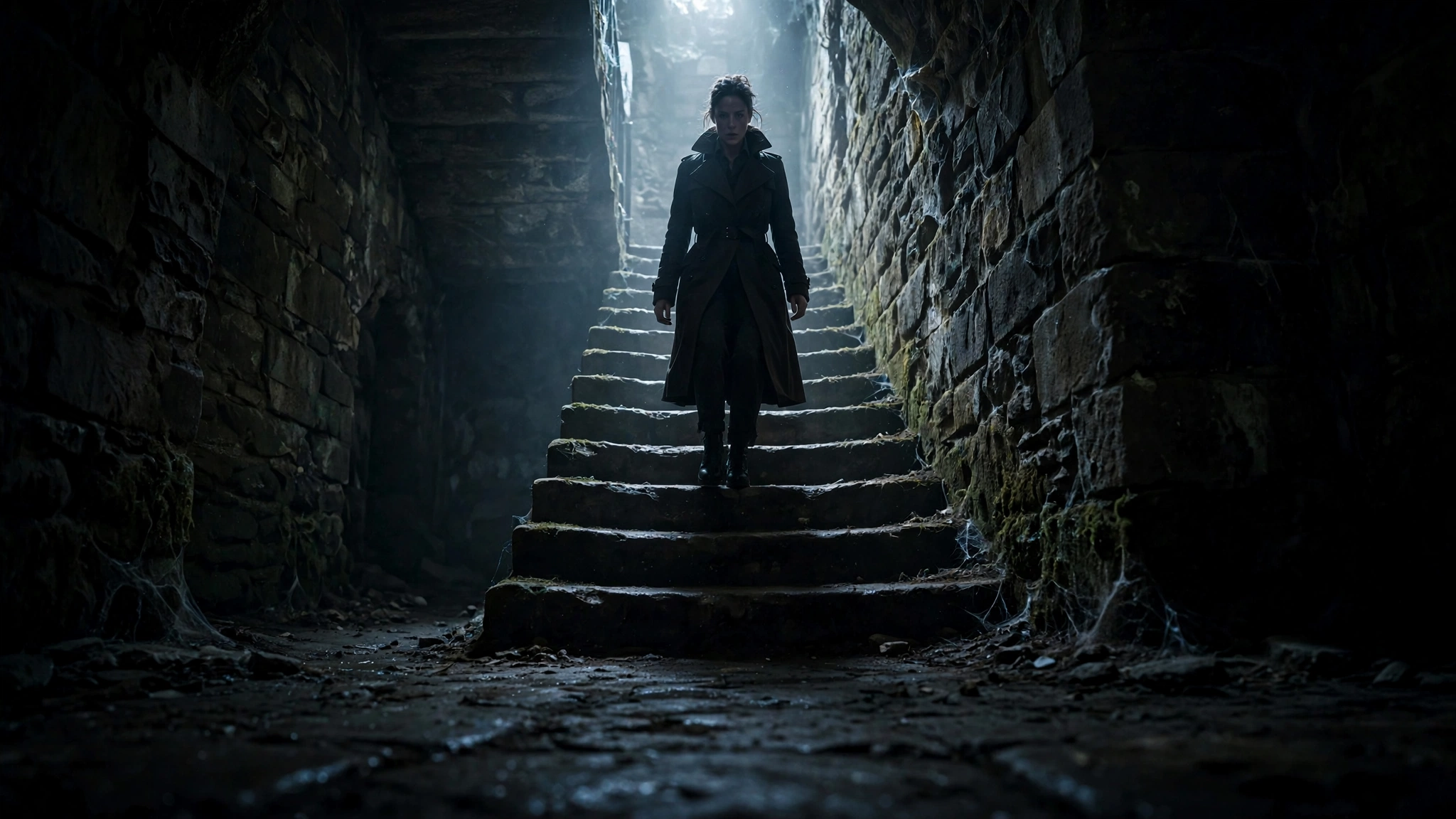
What the film does: The teaser teased a staircase; the trailer pays it off. Johansson’s detective descends into a centuries-old crypt beneath Manhattan — and the camera sits low, looking up at her as she comes down toward something slaughtered below. An altar boy, dead. The low angle makes her look like she’s walking into a mouth.
The AI version: The camera position is everything — low, tilted up, the descending figure backlit from the stairwell above:
Camera low at the bottom of ancient stone crypt stairs looking up, a woman detective descending toward the lens, faint cold light from the stairwell above outlining her silhouette, rough-hewn stone walls, deep black shadows below, slow dread, cinematic horror, photorealistic
Tool tip: Kling handles slow push-ins well — lock the camera low and let her walk into frame.
Shot 2: Flashlight in the black hallway
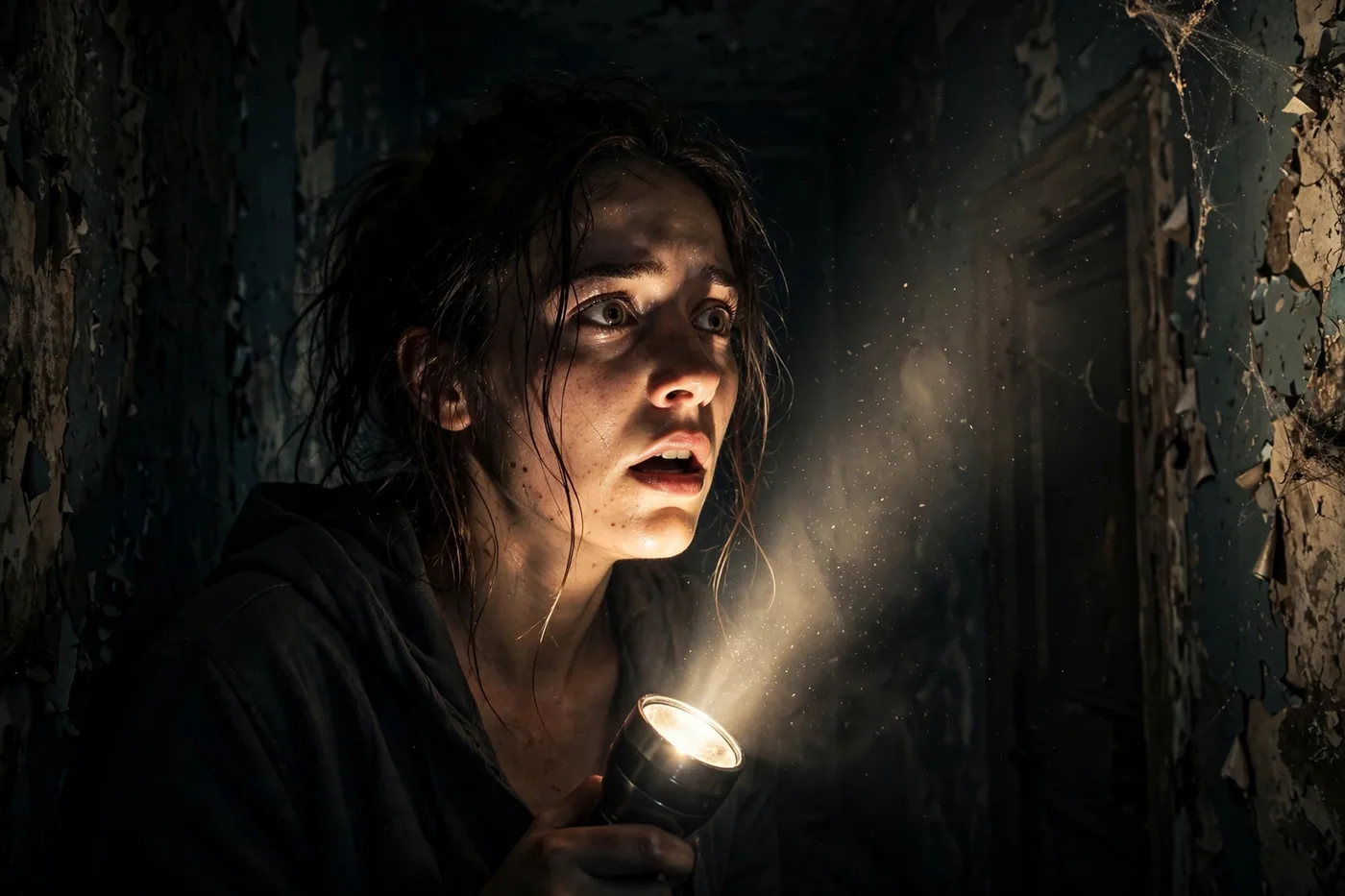
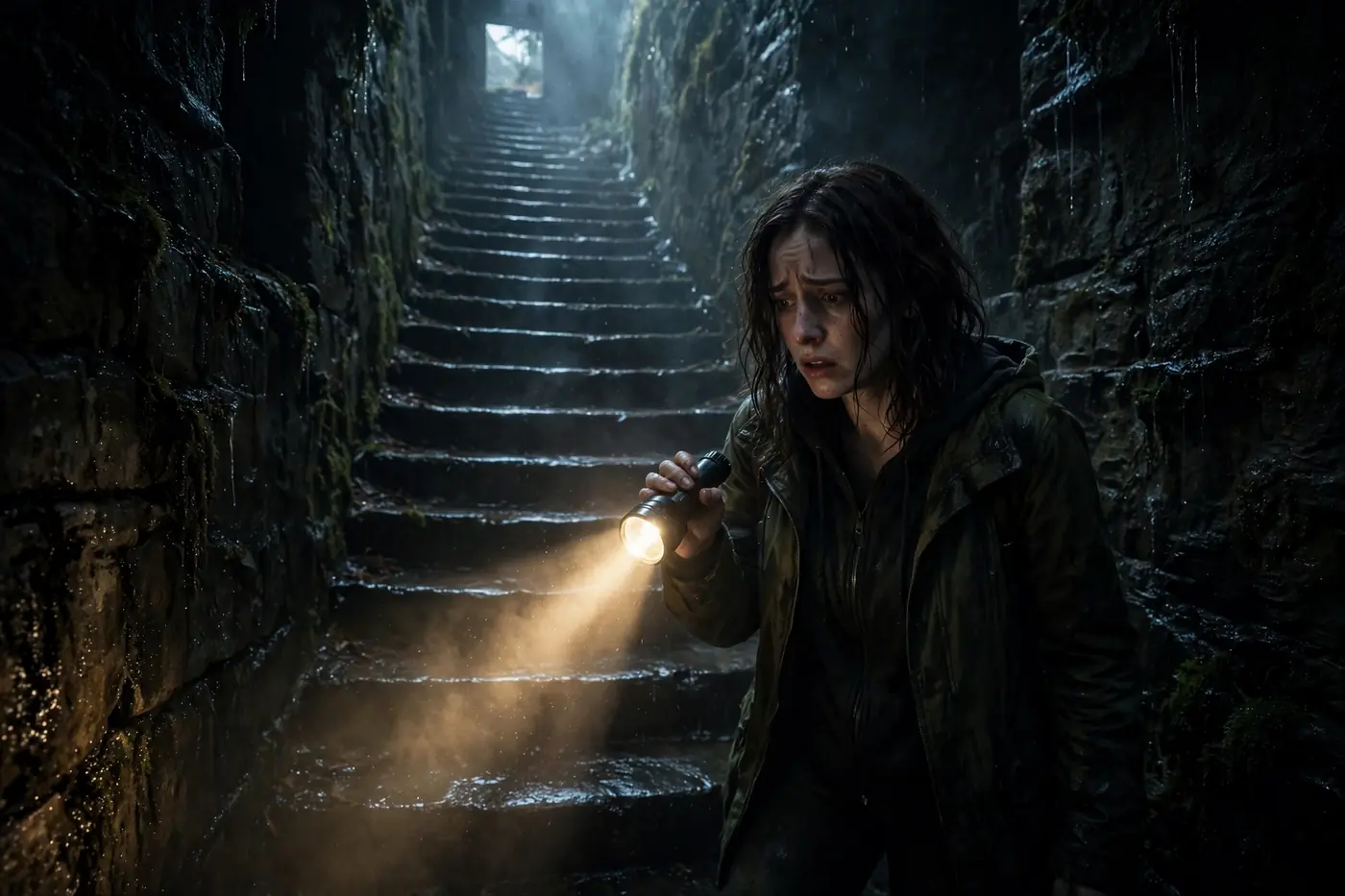
What the film does: Johansson’s detective moves through darkness with only a flashlight — and Flanagan lights her face from below with its bounce, the classic horror underlight. The beam reveals inches; the black keeps everything else. Your imagination does the scaring.
The AI version: Underlighting is the key — the face lit from beneath reads as “horror” instantly, even before you know why she’s scared:
A frightened woman holding a flashlight in a pitch-black hallway, her face lit from below by the torch's glow, beam cutting through darkness revealing peeling walls, dust in the light, deep black shadows everywhere else, cinematic horror, photorealistic
Tool tip: Runway’s lighting coherence is strong here — the flashlight beam and the face illumination will stay consistent.
Shot 3: The yellow-green basement
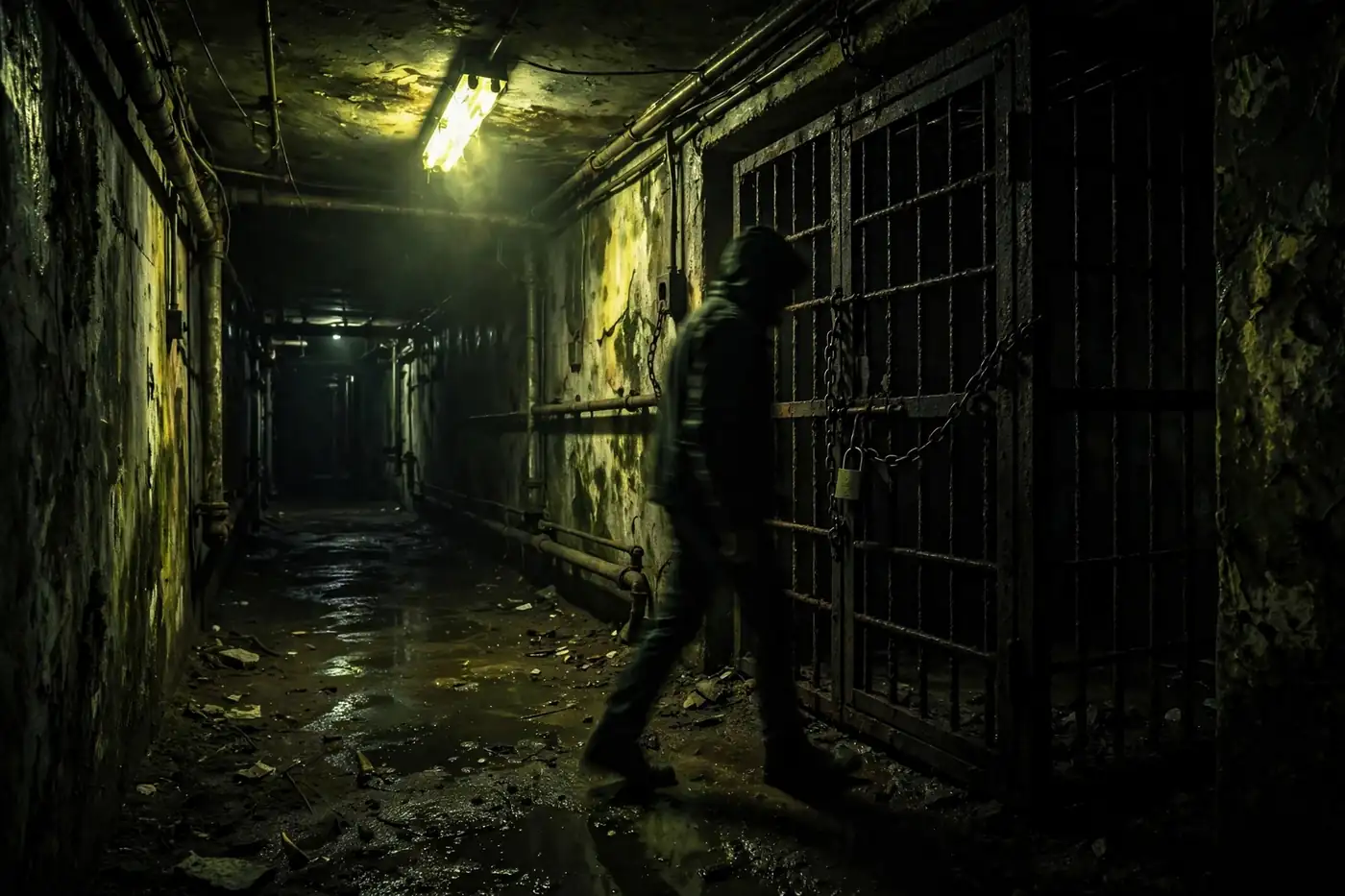
What the film does: The trailer cuts to a basement graded in that unmistakable institutional yellow-green — the color of places that never see daylight. A figure walks past something large and caged. You don’t get a clear look. You’re not supposed to.
The AI version: The grade does 80% of the work. Get the sickly green right and any basement becomes a horror set:
Grim basement corridor lit in sickly yellow-green fluorescent light, concrete walls with stains, a shadowy figure walking past a large dark cage-like object, flickering tube light, oppressive institutional atmosphere, cinematic horror, photorealistic
Tool tip: Pika takes color direction well — name the exact tone (“sickly yellow-green fluorescent”) and it commits.
Shot 4: The massive church
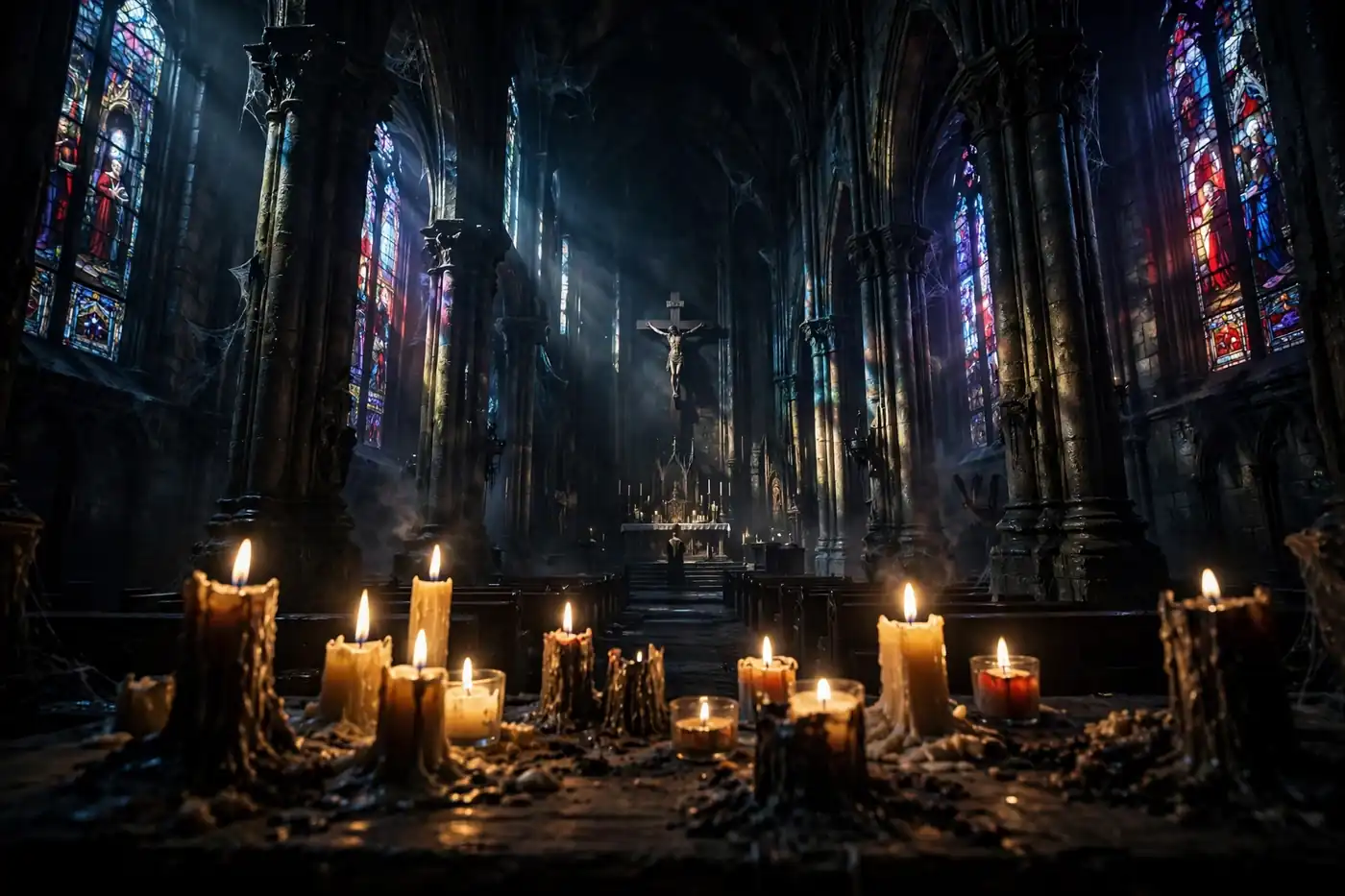
What the film does: Flanagan shoots the church to feel overwhelming — a tiny priest at the altar, a towering crucifix above, stained glass throwing colored light across stone. It’s beautiful and it’s a trap: in this franchise, sacred spaces are where the worst things happen.
The AI version: Scale contrast again — make the human small, the architecture enormous, and let the stained glass do your lighting design for free:
Vast dark church interior, a tiny priest standing at a distant altar beneath a towering crucifix, colored light from tall stained-glass windows falling across stone columns, candle glow in the foreground, sacred and ominous, cinematic, photorealistic
Tool tip: Hailuo holds architectural geometry well — the columns and arches will stay straight and coherent.
Shot 5: Upside down
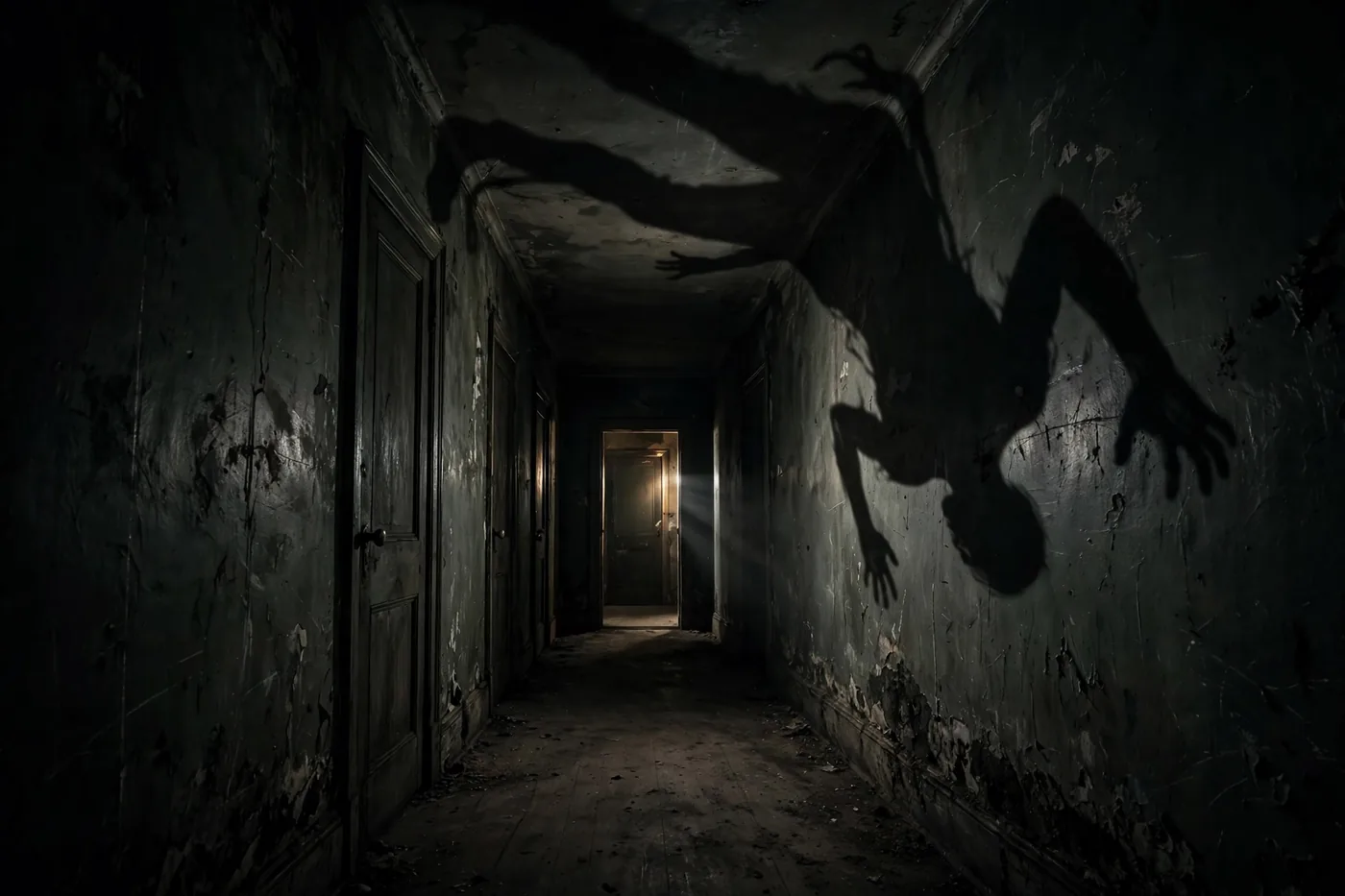
What the film does: The teaser’s most disturbing flash survives into the trailer: something hanging inverted in a hallway. It’s pure Exorcist DNA — the original’s spider-walk, Regan’s contortions — updated. Inversion breaks your brain’s sense of how bodies work, which is exactly why it terrifies.
The AI version: Don’t show the body — show its shadow. An inverted silhouette on a wall is pure dread with zero anatomy risk:
Dark empty hallway lit by a single dim doorway light at the far end, the long distorted shadow of an unseen figure cast upside down across the wall and ceiling, deeply unsettling, deep blacks, cinematic horror, photorealistic
Tool tip: Shadows are AI’s safest horror — no anatomy to glitch, all dread intact.
Shot 6: The execution
What the film does: The trailer’s boldest swing: Father Sunday on a gurney, restrained, IV lines in — a lethal-injection execution shot like a medical procedure. No shadows to hide in. The horror here is bureaucratic: martyrdom processed through paperwork and fluorescent tubes. Nearby, a barrel of blood ties the execution to the film’s martyrdom methods — faith made forensic.
The AI version: Flip the lighting logic — this one is bright, sterile, and that’s what makes it horrifying. Keep the priest still; stillness reads as resignation:
Bright sterile execution chamber, a priest in restraints lying still on a gurney, IV lines taped to his arm, harsh fluorescent overhead light, pale green tile walls, clinical and deeply unsettling, cinematic horror, photorealistic
Tool tip: This is a stillness shot — generate a near-static clip and let the fluorescent hum of the scene do the work.
Shot 7: A name in blood
What the film does: Deep in the crypt, the camera finds it: Julie — a name scrawled in blood across the wall. One word, no context, and it’s the trailer’s coldest image. Flanagan understands that specificity is scarier than scale. Not “a victim.” A name.
The AI version: Extreme close-up, shallow focus — the letters slightly out of focus at the edges, candlelight flickering across wet blood:
Extreme close-up of a name scrawled in fresh blood across rough ancient stone wall, single candle flickering nearby casting moving shadows, shallow depth of field, letters glistening wet, deeply unsettling, cinematic horror, photorealistic
Tool tip: Keep AI-generated text minimal — one short name is about the limit before lettering glitches. “Julie” is five letters; that’s the sweet spot.
The full prompt pack (copy-paste)
All seven, ready to drop into your video generator:
1. Camera low at the bottom of ancient stone crypt stairs looking up, a woman detective descending toward the lens, faint cold light from the stairwell above outlining her silhouette, rough-hewn stone walls, deep black shadows below, slow dread, cinematic horror, photorealistic

2. A frightened woman holding a flashlight in a pitch-black hallway, her face lit from below by the torch's glow, beam cutting through darkness revealing peeling walls, dust in the light, deep black shadows everywhere else, cinematic horror, photorealistic

3. Grim basement corridor lit in sickly yellow-green fluorescent light, concrete walls with stains, a shadowy figure walking past a large dark cage-like object, flickering tube light, oppressive institutional atmosphere, cinematic horror, photorealistic

4. Vast dark church interior, a tiny priest standing at a distant altar beneath a towering crucifix, colored light from tall stained-glass windows falling across stone columns, candle glow in the foreground, sacred and ominous, cinematic, photorealistic

5. Dark empty hallway lit by a single dim doorway light at the far end, the long distorted shadow of an unseen figure cast upside down across the wall and ceiling, deeply unsettling, deep blacks, cinematic horror, photorealistic

6. Bright sterile execution chamber, a priest in restraints lying still on a gurney, IV lines taped to his arm, harsh fluorescent overhead light, pale green tile walls, clinical and deeply unsettling, cinematic horror, photorealistic

7. Extreme close-up of a name scrawled in fresh blood across rough ancient stone wall, single candle flickering nearby casting moving shadows, shallow depth of field, letters glistening wet, deeply unsettling, cinematic horror, photorealistic
What AI still can’t nail
Honesty time. Flanagan’s horror has layers that prompts can’t reach:
- Patience. The trailer holds shots until you break — that’s confidence. AI video gives you short clips; dread needs duration. You can slow the pacing, but you can’t fake a filmmaker’s willingness to hold.
- The Fimognari dark. That “lavishly dark” cinematography is deliberate, layered lighting — fill levels tuned by eye. AI tends to crush blacks into mush or lift them into grey. Getting textured darkness takes iteration.
- Performance. Johansson’s scared face, the priest’s stillness — real actors sell fear in micro-expressions. AI faces in horror read as mannequins the moment they move. Keep your figures distant, silhouetted, or still.
- Sound. Half of this trailer’s terror is the eerie audio design. AI video is silent. Your horror short lives or dies on the sound you add after.
The good news: Flanagan’s visual grammar — darkness, single sources, still figures, slow moves — is extremely AI-friendly. Shadows hide every glitch AI has. This might be the most stealable horror look working today.
Steal the look yourself
If you want to build shots like these without guessing at prompts, the AI Film Prompt Director structures camera, light, and mood for you — free, no signup.
Watch the full Exorcist: Martyrs trailer for the dread — then come back and steal it for free.