
Finally, a game movie that looks like the game
Street Fighter: A Brotherhood Forged hits theaters October 16, and the trailer is a relief. After years of game adaptations that looked embarrassed by their source material — desaturated, dreary, apologizing for the fun — this one goes the other way. Saturated colors. Costumes straight out of the character select screen. A blond flattop you could set your watch by. Director Kitao Sakurai clearly decided the only honest way to film Street Fighter is to embrace every absurd, glorious pixel of it.
Set in 1993, the film follows Ryu and Ken into M. Bison’s World Warrior Tournament. But the real story of the trailer is the look: bright, poppy, tactile — practical sets and real locations with digital augmentation, fight choreography that whips the camera around instead of cutting it to confetti. One critic said it looks like the movie Mortal Kombat wishes it was. Hard to argue.
I broke down seven of the trailer’s signature shots into AI prompts. No trailer frames were used — every image below is AI-generated, in the spirit of the film’s arcade look.
The look in 30 seconds
- Saturated arcade color. Reds, blues, golds pushed hard. This film’s palette comes from a CRT monitor, and it’s proud of it.
- Game-accurate costumes. Gi, flattop, green skin — the silhouettes are instantly readable, exactly like the character select screen.
- The versus frame. Fighters squared off in static wide shots, facing each other across empty space. Pure fighting-game grammar.
- Whipping fight camera. When fists fly, the camera orbits and pushes instead of cutting — you stay inside the fight.
- 1993 period texture. Neon signs, old gyms, film grain over everything. The year is a filter.
- Tactile and practical. Real locations, real sweat, real impact — digital effects augment rather than replace.
- Self-aware playfulness. The film knows it’s ridiculous and leans in. The camera winks; it never sneers.
Shot 1: The versus stare-down
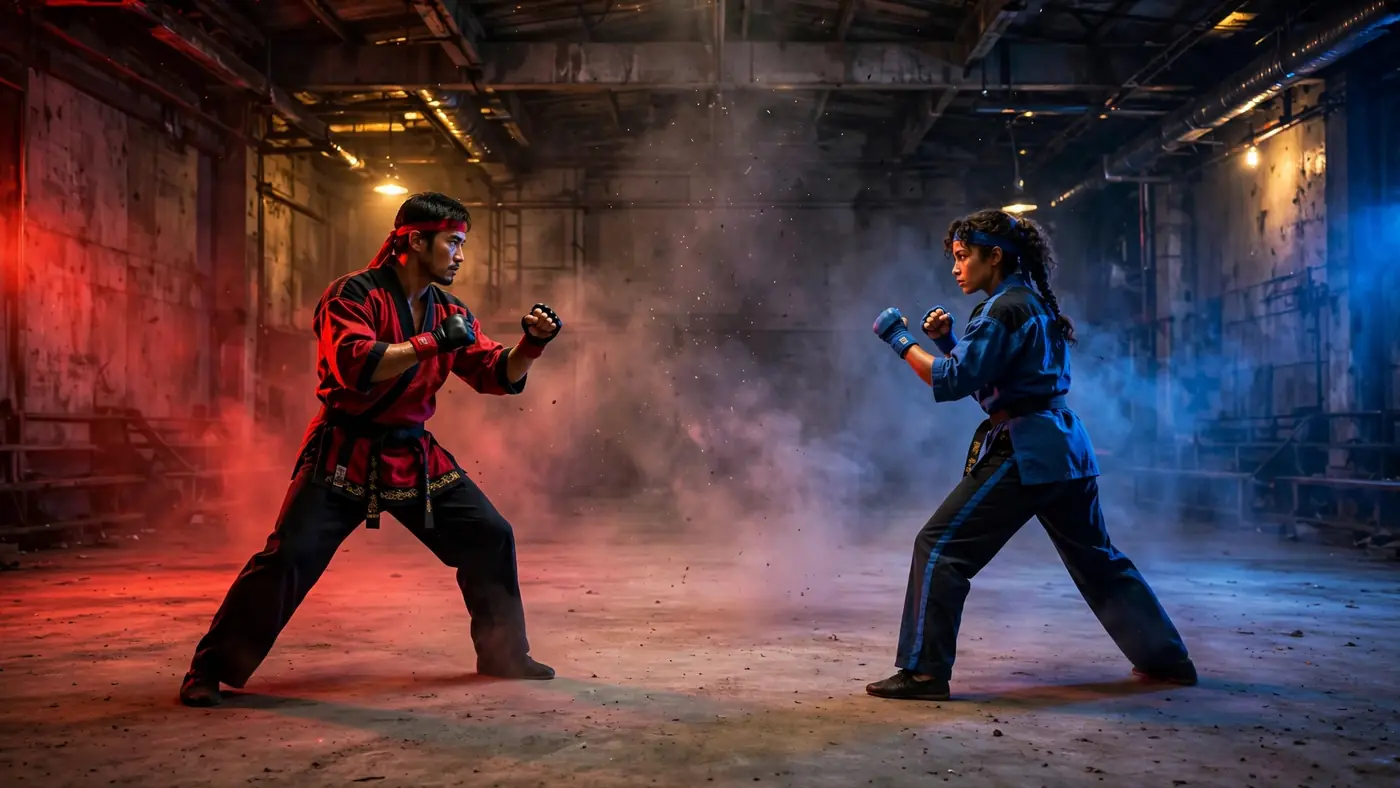
What the film does: This is the foundational image of the whole genre — two fighters, empty space between them, static wide shot. The trailer holds it just long enough for the tension to build. It’s the “versus” screen made flesh, and it works because the symmetry is so clean your brain reads it instantly.
The AI version: Symmetry and stillness. The fighters should be motionless — all the energy is in the potential of the empty space between them:
Static wide shot, two martial artists facing each other across an empty concrete arena floor, dramatic side lighting, dust hanging in the air, saturated colors, tense stillness before a fight, 1990s action cinema feel, photorealistic
Tool tip: Image-to-video is perfect here — generate the composed still, then animate only dust and subtle breathing.
Shot 2: The fireball
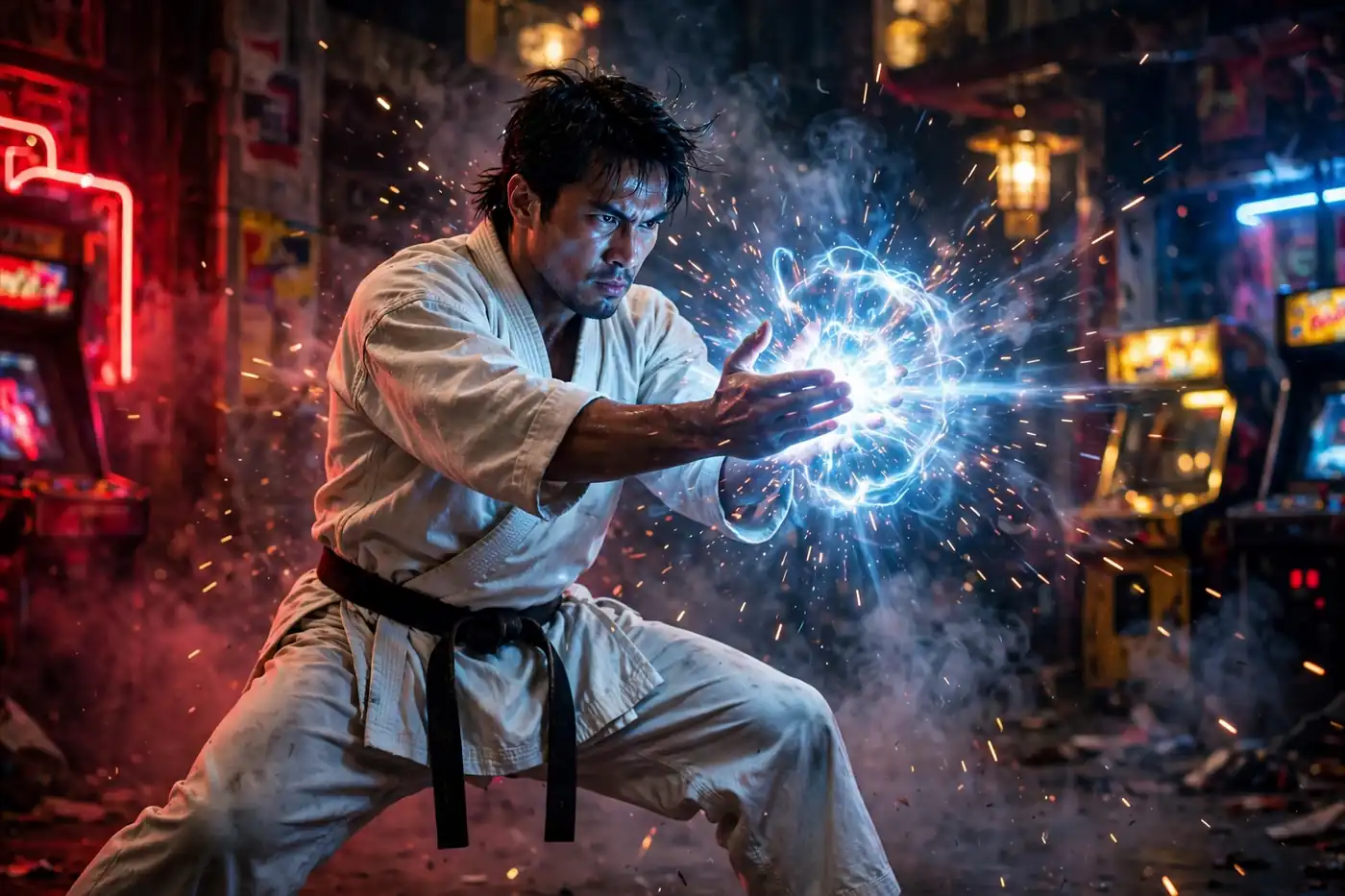
What the film does: The trailer doesn’t shy away from the impossible moves — energy projectiles, glowing hands, the full arcade fantasy. The trick is grounding: the stance is a real martial arts pose, the body mechanics are honest, so the glowing fireball reads as an extension of something physical rather than a cartoon.
The AI version: Anchor the fantastical in the physical. Describe the stance and the body first, the energy second:
Martial artist in a white gi in a deep fighting stance, cupped hands thrust forward releasing a glowing blue-white energy projectile, light blooming across his focused face, sparks and heat distortion, saturated colors, dramatic, photorealistic
Tool tip: Kling’s effects work is strong for energy and glow — this is the shot to use it on.
Shot 3: The beast lunges
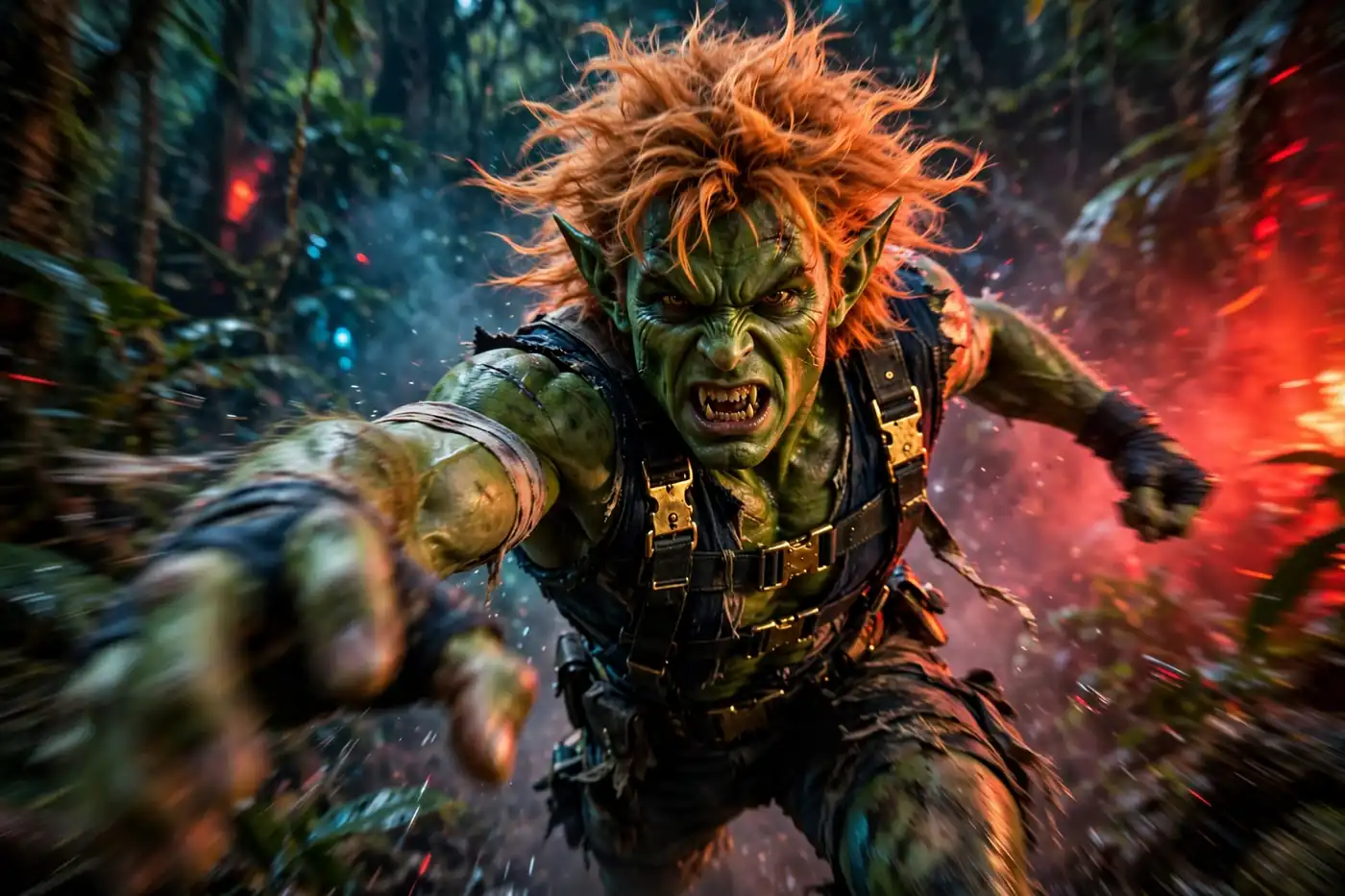
What the film does: The film’s feral fighter — green skin, orange hair, animal energy — is done practically, and that’s the whole point. The trailer sells him with motion: lunges, rolls, unpredictable animal movement. A real performer in makeup, shot dynamically, beats a digital creature every time.
The AI version: Motion blur is your friend. A lunging figure with blurred edges reads as fast and dangerous; a sharp one invites scrutiny:
Dynamic action shot, a feral green-skinned fighter with wild orange hair lunging toward camera, motion blur on limbs, jungle-toned background, raw animal energy, saturated greens and oranges, visceral and fast, photorealistic
Tool tip: Runway handles motion blur and fast action well — lean into the blur, don’t fight it.
Shot 4: The icon portrait

What the film does: Certain characters are introduced as pure iconography — the haircut, the uniform, the dog tags, held in a heroic three-quarter portrait. The trailer treats these like trading cards: here’s the silhouette you know, rendered in flesh, no apology.
The AI version: This is a costume-and-lighting shot. Get the silhouette unmistakable and the light dramatic, and the portrait does the rest:
Heroic three-quarter portrait of a muscular soldier with a tall blond flattop haircut, military vest and dog tags, dramatic rim lighting, dark smoky background, saturated colors, larger-than-life presence, 1990s action hero energy, photorealistic
Tool tip: Still generators (Midjourney-style) are better than video models for crisp character portraits — generate the image, skip the motion.
Shot 5: The 1993 arcade
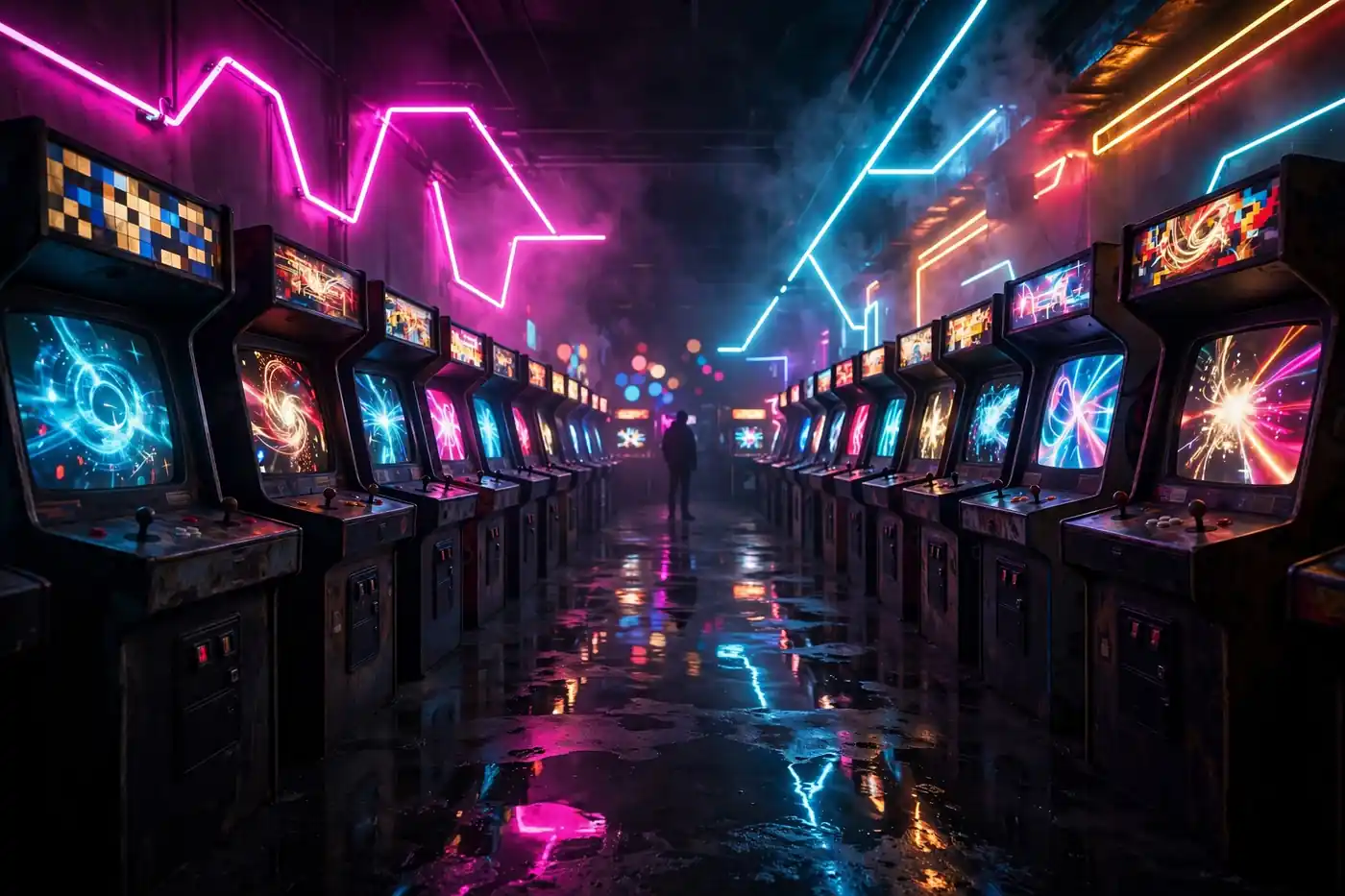
What the film does: Setting the film in 1993 isn’t just nostalgia — it’s a visual strategy. Neon signs, CRT glow, old-school gyms: the period gives every location free production design. The trailer bathes scenes in that specific early-90s palette of magenta, cyan, and warm tungsten.
The AI version: Period texture is all about light sources. Name them — neon, CRT, tungsten — and the era builds itself:
Neon-lit 1990s arcade interior at night, rows of glowing CRT game cabinets, magenta and cyan neon signs reflecting on polished floor, a lone figure silhouetted between the machines, film grain, nostalgic and electric, photorealistic
Tool tip: Pika loves neon and reflective surfaces — this is its home turf.
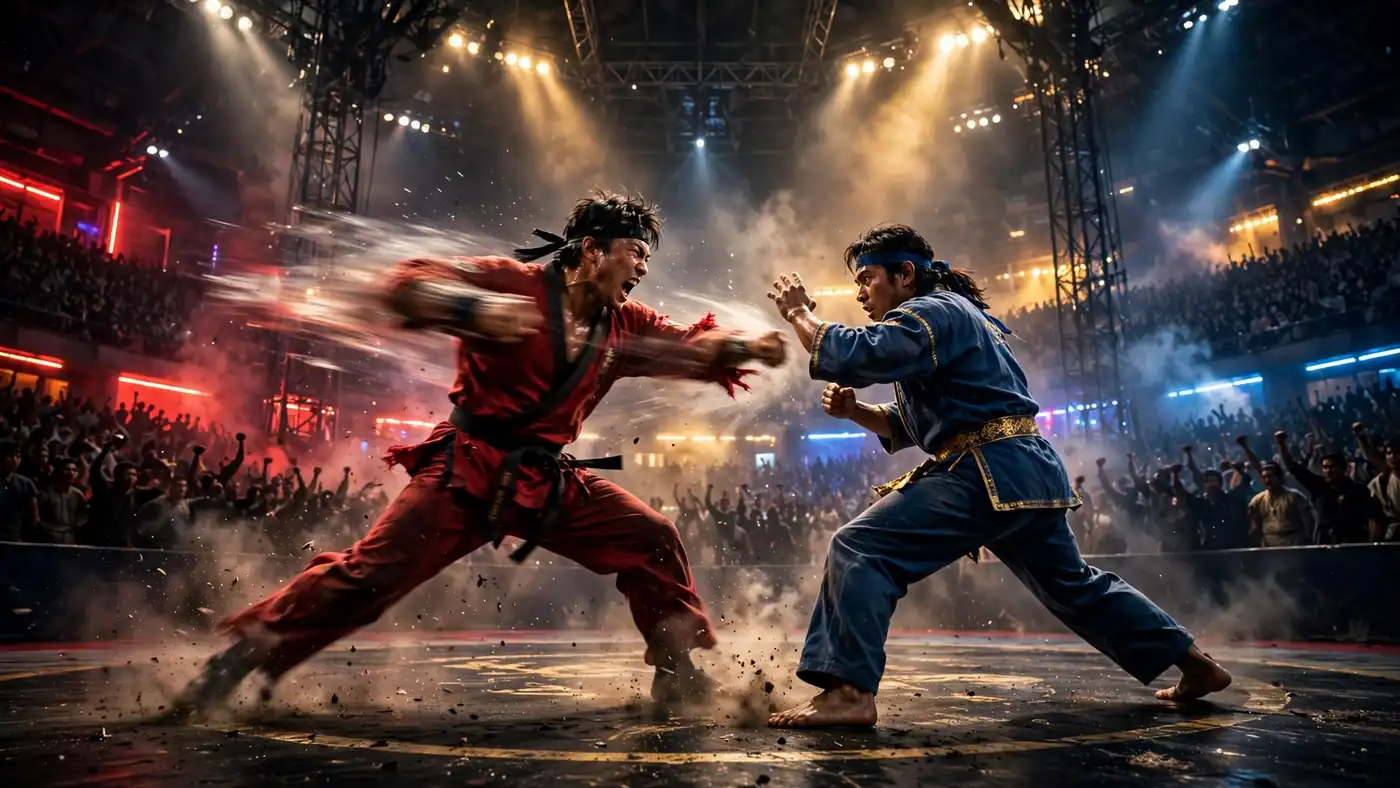
Shot 6: The tournament arena
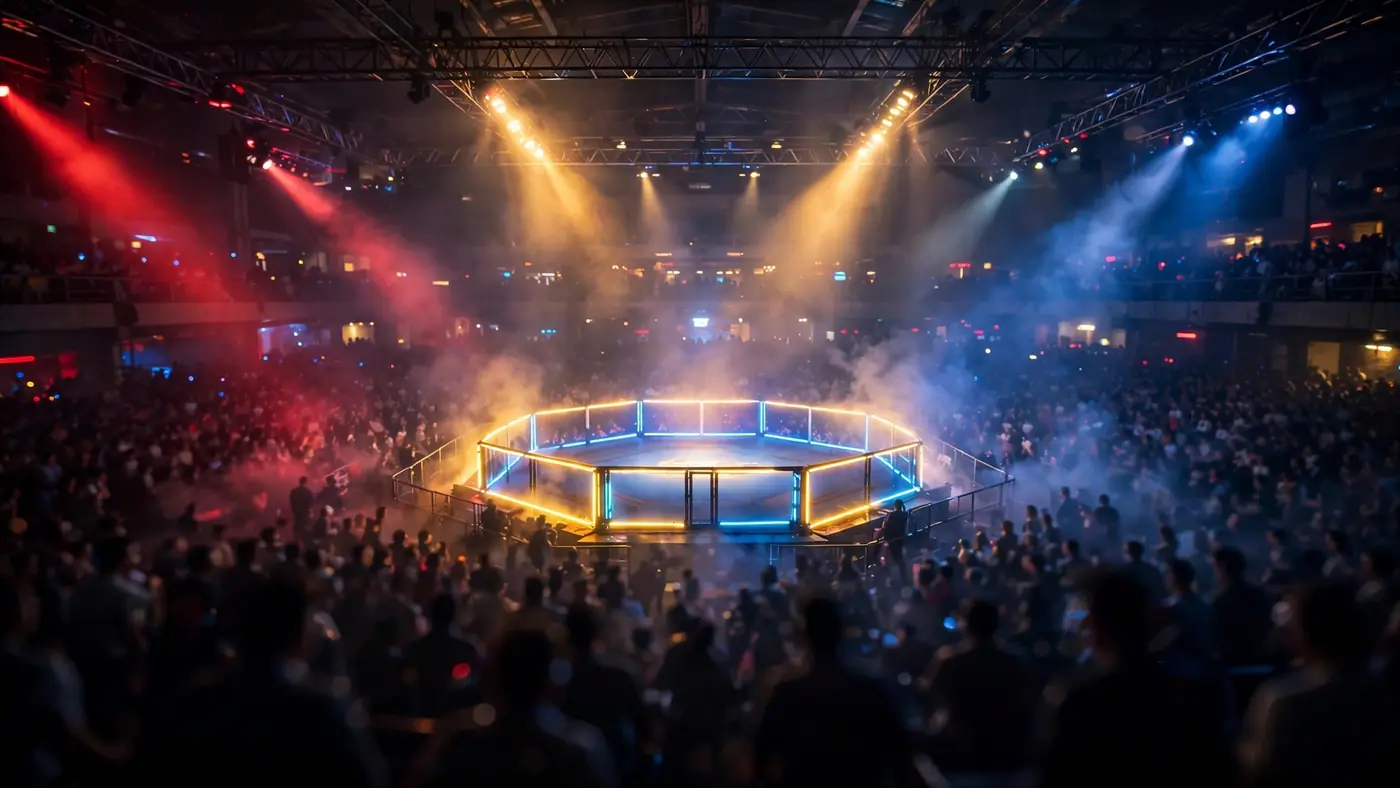
What the film does: Bison’s tournament gets the full spectacle treatment — a massive arena, roaring crowd, sweeping spotlights. The wide establishing shot makes the fights feel like they matter: this isn’t a back alley, it’s the world stage.
The AI version: Crowds are AI’s weakness, so keep them as texture — blurred, backlit, impressionistic. The architecture and light do the heavy lifting:
Epic wide shot of a massive indoor fighting tournament arena, packed crowd as blurred silhouettes, sweeping spotlights cutting through haze, octagon ring glowing at center, saturated colors, grand spectacle scale, cinematic, photorealistic
Tool tip: Luma handles large-scale environments well — keep the crowd soft and the spotlights sharp.
Shot 7: Brothers in arms
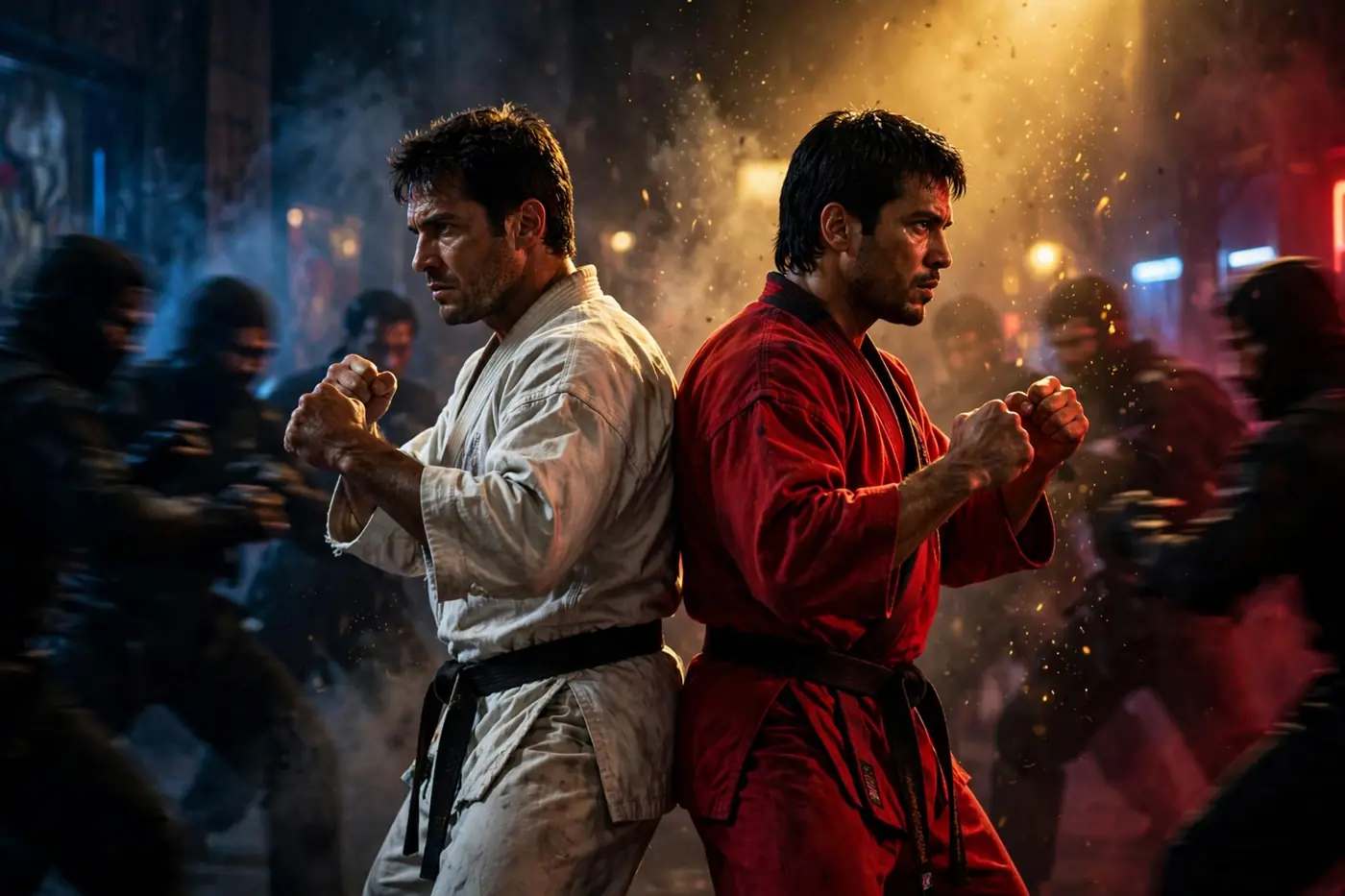
What the film does: The trailer’s emotional anchor is the Ken-and-Ryu dynamic — and its signature image is the two of them back to back, surrounded. It’s the “brotherhood forged” of the title in a single composition: trust as a fighting stance.
The AI version: Two figures, one composition. Keep them close together in frame — the unity of the pose is what sells it:
Two martial artists standing back to back in fighting stances, one in a white gi and one in red, surrounded by shadowy opponents closing in, dramatic low-key lighting, dust and tension in the air, saturated colors, brotherhood and defiance, cinematic, photorealistic
Tool tip: Hailuo keeps multi-figure compositions coherent — good choice for the duo framing.
The full prompt pack (copy-paste)
All seven, ready to drop into your video generator:
1. Static wide shot, two martial artists facing each other across an empty concrete arena floor, dramatic side lighting, dust hanging in the air, saturated colors, tense stillness before a fight, 1990s action cinema feel, photorealistic

2. Martial artist in a white gi in a deep fighting stance, cupped hands thrust forward releasing a glowing blue-white energy projectile, light blooming across his focused face, sparks and heat distortion, saturated colors, dramatic, photorealistic

3. Dynamic action shot, a feral green-skinned fighter with wild orange hair lunging toward camera, motion blur on limbs, jungle-toned background, raw animal energy, saturated greens and oranges, visceral and fast, photorealistic

4. Heroic three-quarter portrait of a muscular soldier with a tall blond flattop haircut, military vest and dog tags, dramatic rim lighting, dark smoky background, saturated colors, larger-than-life presence, 1990s action hero energy, photorealistic

5. Neon-lit 1990s arcade interior at night, rows of glowing CRT game cabinets, magenta and cyan neon signs reflecting on polished floor, a lone figure silhouetted between the machines, film grain, nostalgic and electric, photorealistic

6. Epic wide shot of a massive indoor fighting tournament arena, packed crowd as blurred silhouettes, sweeping spotlights cutting through haze, octagon ring glowing at center, saturated colors, grand spectacle scale, cinematic, photorealistic

7. Two martial artists standing back to back in fighting stances, one in a white gi and one in red, surrounded by shadowy opponents closing in, dramatic low-key lighting, dust and tension in the air, saturated colors, brotherhood and defiance, cinematic, photorealistic
What AI still can’t nail
Honesty time. The arcade look has limits that prompts can’t cross:
- Real fight choreography. The trailer’s fights work because trained performers throw real techniques at real speed. AI-generated fighters move like they’re underwater — impressive for a second, unconvincing for a combo. Use AI for the moments between strikes, not the strikes.
- Costume accuracy. Game-accurate costumes have exact proportions fans know by heart. AI drifts — the gi ties wrong, the haircut morphs. For icon shots, generate many variations and pick ruthlessly.
- Impact. A punch landing has weight because a body receives it. AI can’t sell impact physics — hits look like high-fives. Cut on the strike, or keep the contact out of frame.
- The wink. The film’s self-aware tone lives in performance — a raised eyebrow, a perfectly timed smirk. AI faces don’t do subtle comedy. Write the humor into the situation, not the expression.
But here’s the thing: this film’s visual language — bold color, clean compositions, iconic silhouettes — is practically designed for AI. Saturated color grading is a prompt away. The versus frame is just symmetry. And nobody expects photoreal subtlety from a fireball.
Steal the look yourself
If you want to build shots like these without guessing at prompts, the AI Film Prompt Director structures camera, light, and mood for you — free, no signup.
Street Fighter: A Brotherhood Forged hits theaters October 16. Watch the trailer for the arcade energy — then come back and steal it for free.